Yorick’s Death
The Life and Opinions of Tristram Shandy, GentlemanYorick’s Death brings the campaign against Yorick to its personal and professional end: overwhelmed by an attack he scarcely recognizes until it is too late, he dies broken-hearted, while his last exchange with Eugenius turns the damage done to him into a bitterly comic image of a bishop’s mitre that could never fit. The grave and its spare epitaph then carry his story beyond death, making private friendship into public remembrance.
The Attack and Its Reversal
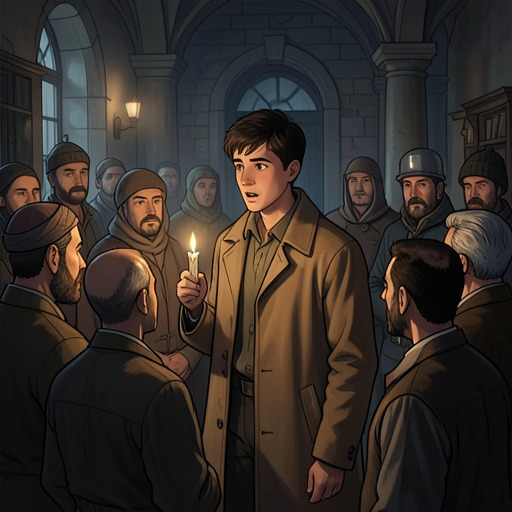
Eugenius had warned Yorick that malicious people could turn his sportive sallies against him. The danger, he said, was not simply that fools might mistake his intent or knaves refuse to understand it; they could unite in mutual defence and make a war of reputation, attacking his character and prospects through dishonouring tales. That warning gives the later collapse its shape: Yorick’s innocence and good intentions offer no protection against a campaign built from insinuation and coordinated hostility.
Yorick scarcely heard the prediction read without tears and a promise to ride his horse more soberly in future. But the attempt at self-correction comes too late. A confederacy is already formed, and its plan is carried out all at once, with little mercy from the allied attackers and little suspicion from Yorick. While he believes that preferment is ripening, his enemies have struck at the root of his prospects. The contrast between anticipated advancement and unseen destruction makes the reversal especially stark: he is not shown recognizing the danger in time to defend himself.
He fights on with what the narrator calls imaginable gallantry, but numbers and the calamities of the conflict wear him down. The manner of the attack weighs more heavily than its mere duration: it is its ungenerous character, as well as the pressure of the war, that finally makes him lay down his sword. He keeps up his spirits outwardly to the last, yet is generally believed to have died broken-hearted. The account thus distinguishes a brave appearance from the inward damage it cannot conceal.
Eugenius at the Bedside
A few hours before Yorick dies, Eugenius arrives intending to see him for the last time and take his farewell. Yorick takes his hand, thanks him for the many proofs of friendship between them, and says that if they meet again he will thank him once more. He then tells Eugenius that he is within hours of giving his enemies the slip forever. Eugenius answers with tears and tries to sustain hope, urging him not to surrender his spirits and imagining that enough of Yorick may remain for him still to become a bishop.
Yorick responds not with an argument but with a request: Eugenius should look at his head. When Eugenius sees nothing wrong, Yorick explains that blows dealt by his enemies in the dark have bruised and misshapen it. Even if he recovered, he says, no mitre would fit. The imagined bishopric, first invoked as Eugenius’s effort to encourage him, becomes Yorick’s bleak measure of what the attack has taken away. His injury is at once bodily in the scene and emblematic of a career and identity battered beyond restoration.
The final line is spoken as Yorick’s breath is failing. Yet the narrator marks a surviving spark in it: a momentary light in his eyes and something of a Cervantick tone. The recollection of the flashes of wit that once made a table roar places his comic vitality beside his visible ruin, without pretending that wit can undo it. Eugenius understands the exchange as confirmation that his friend’s heart is broken. He squeezes Yorick’s hand and leaves the room softly, weeping.
Death and Burial
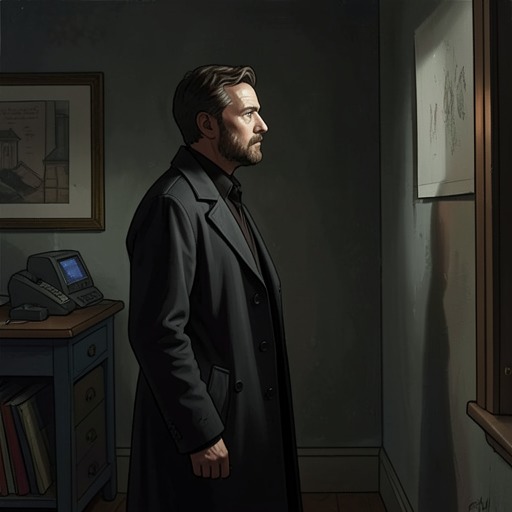
Yorick follows Eugenius with his eyes as he walks to the door, then closes them and never opens them again. The ending is conveyed through this small sequence of gestures rather than through an account of further speech or action: the departing friend, the gaze that follows him, and the eyes that close for the last time. Their brevity gives the bedside farewell its finality and makes Eugenius’s departure the last human presence described at Yorick’s death.
Yorick is buried in a corner of his churchyard beneath a plain marble slab. Eugenius lays it on the grave with the executors’ permission and chooses no elaborate epitaph: its entire inscription is “Alas, poor Yorick!” The words serve as both epitaph and elegy, compressing grief and remembrance into a brief exclamation. The plainness of the stone contrasts with the complicated campaign that brought Yorick down; what survives publicly is not the full accusation or defence, but a name held in pity.
Public Memory and Narrative Meaning
The epitaph does not remain a private tribute. A footpath crosses the churchyard close beside the grave, and passersby stop, look at the slab, and sigh as they continue on. The narrator imagines this happening ten times a day, with the phrase read in many plaintive tones. Yorick’s burial place therefore becomes a repeated encounter: the friends’ grief is echoed by strangers who pause long enough to acknowledge him.
That public response reverses, without erasing, the damage of the attack. The campaign had threatened to make his character bleed, his faith questioned, his works belied, and his wit forgotten; the scene at the grave instead presents general pity and esteem. Yet the memorial cannot restore his lost prospects or give a full account of the wrong done to him. Its force lies in the smallness of its words and the frequency with which they are spoken. The story closes on a social act of remembrance, as each passing reader or traveller briefly makes the epitaph his own.